
· by Michael Blair, Nashville's Irrigation
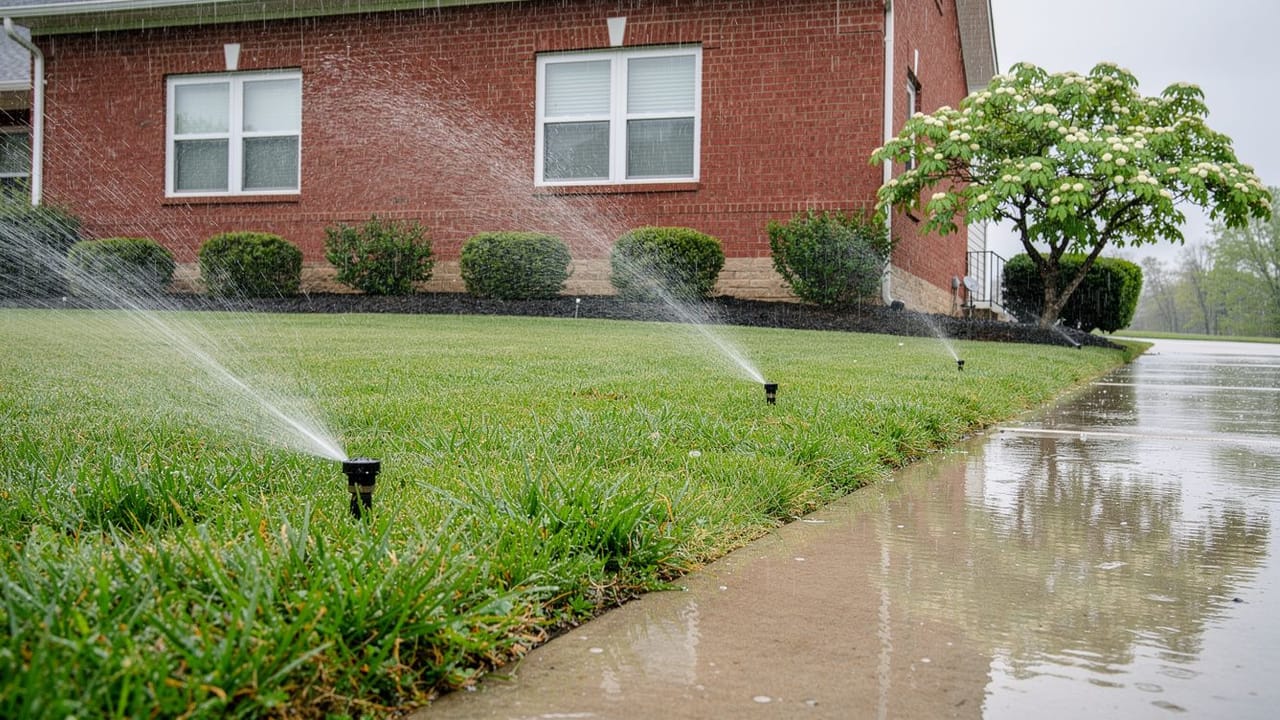
A conventional controller runs the schedule it was given regardless of what the weather is doing. The EPA’s brochure Is Your Watering Under Control? warns that a clock timer left to “set it and forget it” can end up watering during rain storms. In a Middle Tennessee spring, that means watering through storms, and it is the problem our controller and smart watering work starts from.
What does a smart irrigation controller do?
Weather-based controllers use local weather data and landscape conditions to tailor the amount, frequency and timing of watering, according to EPA WaterSense’s page on weather-based irrigation controllers, so the controller decides when and how much to water instead of repeating one program all year. The other type WaterSense labels reads the moisture in the soil and holds off when the ground does not need water. Either kind can be a stand-alone controller or an add-on that works alongside an existing clock-based one.
The saving is real, and it comes from skipping water the landscape does not need. EPA’s fact sheet on WaterSense labeled irrigation controllers says more than 28 million U.S. homes have in-ground sprinkler systems, that most of them run on some sort of clock, and that many of those homeowners irrigate when the landscape may not need it. The WaterSense page adds that schedules are often set for the height of the growing season and left there, and it estimates that swapping a standard clock-based controller for a labeled weather-based one saves an average home nearly 7,600 gallons a year.
Why do smart controllers pay off in Nashville?
Rain in Nashville does not fall on an even schedule. The National Weather Service’s Nashville climate normals make May the wettest month at 5.02 inches, with March and April close behind, while October is the driest at 3.36 inches. A program set in a dry October week is still running in a wet May, and the EPA brochure says the schedule should change with the seasons: two to three sessions a week may suit summer, while in fall or winter even weekly watering can waste water in some areas.
On a conventional controller, the first thing we look for is a rain sensor. The brochure recommends a rain or soil sensor that turns the system off when the weather turns wet, and where one is missing we add it whether or not the controller itself is being replaced.
- A rain or soil sensor shuts the system off when it turns wet
- A weather-based controller resets the schedule from local conditions
- Zone-by-zone soil and plant settings matter
- Wi-Fi models let us run a zone from a phone while we watch the heads
- A flow sensor is worth asking about on a large system
They still need setting up properly
WaterSense is careful on this point. Its irrigation controllers page says a labeled controller can replace a clock-based one with proper installation, programming and maintenance, and the EPA brochure asks homeowners to know their soil type and what their plants need before setting a schedule, grouping plants with similar needs into hydrozones the controller can water separately. When we program one, each zone gets its own soil and plant settings, and we note the slope, the head type and how much sun the zone gets.
Slopes and tightly packed clay are where the brochure suggests the “cycle and soak” method, which lets water sink in between shorter runs instead of running off. Where we see pooling or runoff on a zone, that is how we set it up, and our post on how much to water a Nashville lawn covers measuring what each zone actually puts down.
Flow sensing
A flow sensor measures how much water a zone draws. On controllers that support one, a zone drawing well above its usual amount can be flagged, which is how a broken head or a split line shows up from the controller’s side. Whether the controller sends an alert or shuts the zone down depends on the model, and we check what a given one does before recommending it.
The case for one is what a leak costs while nobody is looking. EPA’s Fix a Leak Week page says an irrigation leak just 1/32 of an inch in diameter can waste about 6,300 gallons in a month, and the EPA brochure asks for a check of pipes and heads before the weather turns warmer. A zone that keeps running after its cycle ends is a different fault, covered in our post on a sprinkler zone that will not shut off. If you want your controller looked at or replaced, ask us for a free estimate.
Sources
- U.S. EPA WaterSense, Is Your Watering Under Control? (EPA-862-F-21-007) — Clock timers can water during rain storms; change the schedule with the seasons; rain or soil sensor to shut off when wet; know soil type and plant needs; hydrozones; cycle and soak on slopes and clay; check for leaks before warm weather; 7,600 to 15,000 gallons saved by type
- U.S. EPA WaterSense, Weather-Based Irrigation Controllers — Local weather data and landscape conditions set amount, frequency and timing; stand-alone or add-on; schedules set for peak season and not adjusted; nearly 7,600 gallons a year saved
- U.S. EPA WaterSense, Get Smart With a WaterSense Labeled Irrigation Controller (EPA-832-F-21-009) — More than 28 million homes with in-ground systems, most on clock-based devices; homeowners irrigating when the landscape may not need it
- National Weather Service Nashville, Nashville Climate Records — Monthly precipitation normals: May wettest at 5.02 inches, October driest at 3.36 inches
- U.S. EPA WaterSense, Irrigation Controllers — Savings with proper installation, programming and maintenance; up to 15,000 gallons a year for an average home; soil moisture-based controllers
- U.S. EPA WaterSense, Fix a Leak Week — A 1/32-inch irrigation leak can waste about 6,300 gallons a month
FAQ
Are Smart Irrigation Controllers Worth It — questions
Do smart irrigation controllers actually save water?
They can. The EPA estimates that replacing a standard clock-based controller with a WaterSense labeled one can save an average home up to 15,000 gallons a year, and its brochure gives a range of 7,600 to 15,000 gallons depending on the type of controller. The saving comes from not watering when the landscape does not need it, which here includes wet spring weeks, since May is Nashville’s wettest month on average. A rain or soil sensor on a conventional controller handles the rainy days, though not the change of seasons.
Is a rain sensor enough on its own?
It does one job: the EPA recommends a rain or soil sensor to turn the system off when the weather turns wet. It does not change the schedule as the seasons change, which a clock-based controller leaves to you, and it does not account for soil or plant type. If someone adjusts the schedule through the year, a sensor on the existing controller may be enough; if nobody does, a weather-based controller does that adjusting itself.
Do I need to configure each zone separately?
Yes. The EPA ties the savings from a labeled controller to proper installation, programming and maintenance, and its brochure asks for the soil type and the plants’ needs before a schedule is set. We set each zone for its own soil and plants, and on slopes or tightly packed clay where water pools or runs off, we split the run into shorter cycles with a soak in between.
What is the best smart sprinkler controller?
For most yards, a WaterSense labeled model, weather-based or soil-moisture, that can be set zone by zone for soil, plants and slope. We also look for rain or soil sensor support, Wi-Fi so a zone can run from a phone while someone watches the heads, and flow sensing on a large system.