
· by Michael Blair, Nashville's Irrigation
Nashville winters are mild enough that plenty of irrigation systems here get left charged until spring, but the airport still averages 67 days a year with a low at or below 32 degrees, according to the National Weather Service’s Nashville climate page. A backflow assembly sitting above ground full of water is exposed to every one of those nights. This is how we shut a system down on a winterization visit, and what a homeowner doing it alone needs to know about the rules in Davidson County.
What breaks when a sprinkler system freezes?
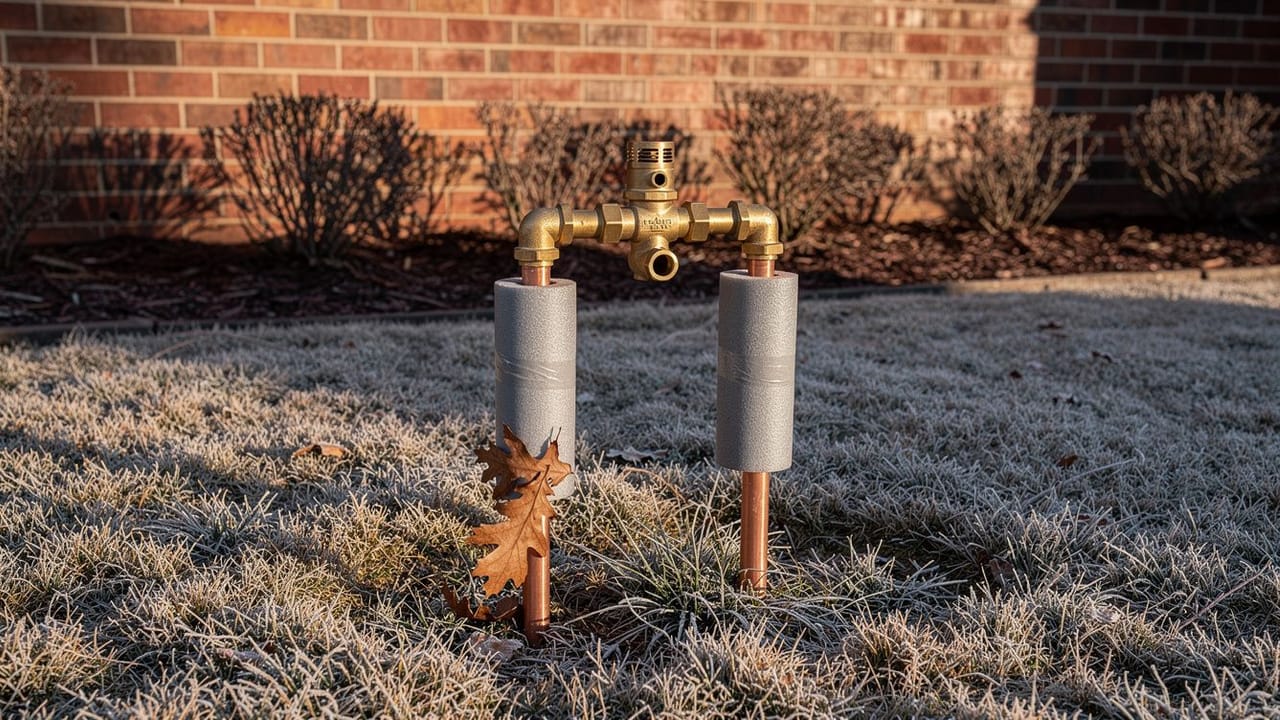
The backflow preventer is the part we worry about first. It usually stands above ground and holds water, and water expands when it freezes. Rain Bird’s homeowner page on preparing an irrigation system for winter says to insulate backflow preventers and valves that sit above ground, and to keep the insulation off the device’s air vents and drain outlets.
Then come above-ground valves, the main shut-off and any exposed piping. Rain Bird says the main shut-off valve needs protecting against freezing and that any above-ground pipe should be wrapped in foam tape or foam tubes. The lines and heads underground are handled differently: the water has to come out of them, which is the next step.
How is the water cleared out of the lines?
Rain Bird lists three ways to get water out of the pipes: a manual drain valve, an automatic drain valve or a compressed-air blowout. Because of the safety risks, it recommends calling a local irrigation specialist for that part. On our visits every zone is blown out with compressed air.
In Davidson County, Metro Water Services’ guidelines to winterize irrigation systems set rules anyone with a compressor should read first. Metro says to avoid blowing air through the backflow device, which may damage it. The compressor goes on a service port installed behind the backflow device, and the air is blown toward the irrigation system only. Valves are not permitted on drain plugs or service ports, and no connections or modifications are permitted inside the meter box.
At minimum, turn off the water to the system, drain the line between the meter and the backflow device, and protect whatever stays above ground. Metro’s guidelines say it is preferable to take the backflow device off the line for the winter and to drain it if it stays in place. The ports on the device are marked for testing only.
- Shut off the irrigation supply before the first freeze
- Blow out the zones with compressed air through a service port behind the backflow device, never through the device
- Remove the backflow device, or drain it and insulate it with the vents and drain outlets left clear
- Set the controller to rain mode or off
- Note the shut-off location for spring
When to do it
Earlier than most people expect. The same National Weather Service page puts Nashville’s average first fall low of 32 degrees or colder on November 11. The earliest on its record came on October 2, 1984, and the latest on November 29, 2024. We aim to have systems shut down by early November, and sooner when a freeze shows up in the forecast.
Waiting for cold weather to settle in is a gamble, because the first freezing night has come weeks ahead of the average before. If you would rather not put a compressor on your own lines, book a winterization visit with us in October and the date is set before the forecast decides it for you.
Spring start-up
We open the supply slowly in spring and let the lines fill before any zone runs, and our post on spring sprinkler start-up walks through that order and the reasons for it. The backflow device goes back on and gets tested: Metro Water Services’ Cross Connections Program says every backflow device must be inspected annually by Metro Water Services or its contractor, and a home needs one when an irrigation or fire system is connected to its water service. Our page on backflow testing explains what that test involves.
Then run each zone and walk it, looking for heads that came through the winter cracked, tilted or buried. A head found broken on that first walk gets replaced before the lawn starts asking for water, and our sprinkler repair crews handle heads, valves and wiring.
Sources
- NOAA National Weather Service Nashville, Nashville Climate Page — Average 67 days a year with a minimum at or below 32 F; average first fall freeze November 11, earliest October 2, 1984, latest November 29, 2024
- Rain Bird, Preparing for Winter: How do I winterize my irrigation system — Insulate above-ground backflow preventers, valves, main shut-off and piping without blocking vents and drains; manual drain, automatic drain or compressed-air blowout; rain mode; specialist recommended for safety
- Metro Water Services, Guidelines to Winterize Irrigation Systems (PDF) — Do not blow air through the backflow device; compressor on a service port behind it, air toward the system only; no valves on drain plugs or service ports; no modifications in the meter box; removing the backflow is preferable; ports for testing only
- Metro Water Services, Cross Connections Program — Every backflow device inspected annually by Metro Water Services or its contractor; homes with an irrigation or fire system need a device
FAQ
Winterizing an Irrigation System in Tennessee — questions
Do irrigation systems really need winterizing in Nashville?
Yes, mainly for the backflow preventer, which usually stands above ground holding water. The National Weather Service counts an average of 67 days a year in Nashville with a low at or below 32 degrees, and Rain Bird advises insulating above-ground backflow preventers and valves and getting the water out of the pipes before winter.
When should I winterize in Middle Tennessee?
By early November. The National Weather Service puts Nashville’s average first freeze on November 11, and it has come as early as October 2. If a freeze is forecast before the system is shut down, do it then rather than waiting for the date.
Can I winterize the system myself?
You can shut off the supply, set the controller to rain mode, and drain and insulate what sits above ground. The compressed-air blowout is the harder part: Rain Bird recommends a local irrigation specialist because of the safety risks, and in Davidson County Metro Water Services says to blow air in at a service port behind the backflow device, never through the device, and permits no connections or modifications inside the meter box.
Can you winterize a sprinkler system without a compressor?
Rain Bird names two other ways to empty the pipes: a manual drain valve or an automatic one. Whatever the method, shut off the water to the system, drain the line between the meter and the backflow device, and remove the device or drain it and insulate it with the vents clear.