
· by Michael Blair, Nashville's Irrigation
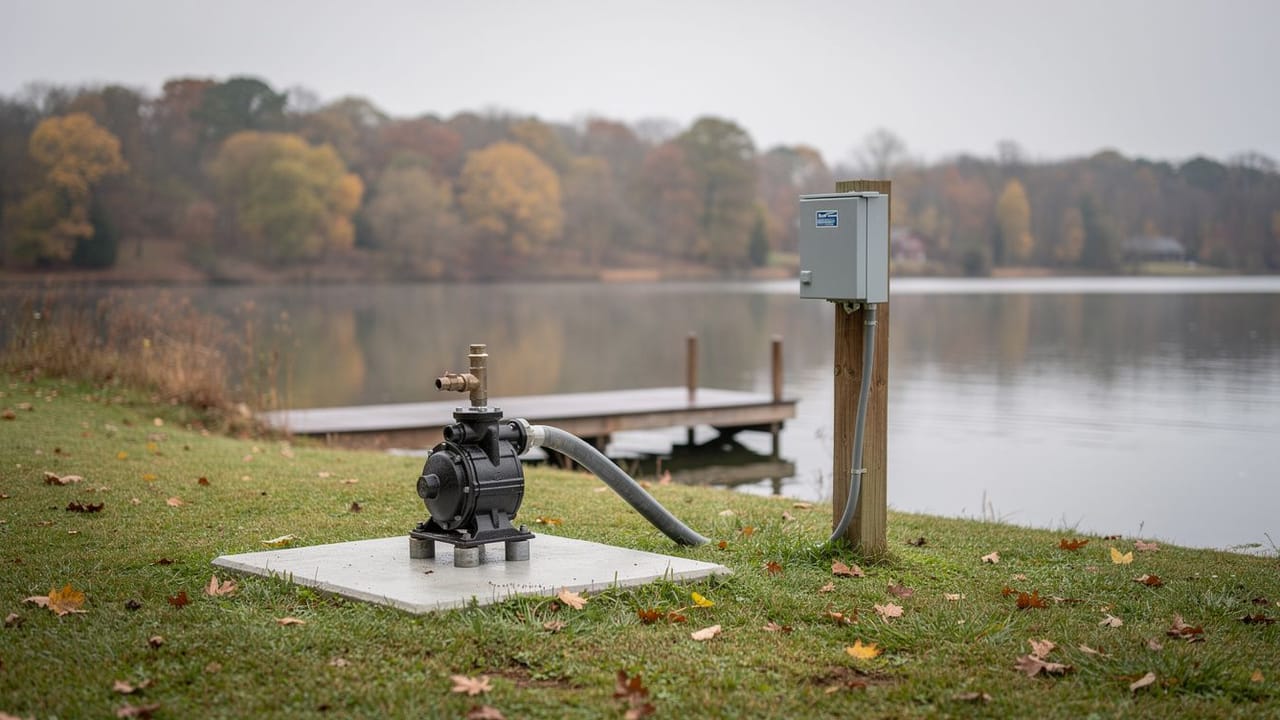
Most sprinkler systems in Middle Tennessee run on city water, but on lakeside lots around Old Hickory Lake, and on country property with a well, the water comes from a pump. That adds two parts that can fail on their own: the pump and the relay that starts it. When the heads stop popping up, the problem can be in the controller, the relay, the wiring, the power to the pump or the water feeding it.
Here is how those parts work together, why a pump loses prime, and what we check on a pump repair call.
How does a sprinkler pump know when to run?
A sprinkler pump runs when the controller closes a pump start relay, and the controller never powers the pump itself. Rain Bird’s ESP-TM2 controller manual states plainly that the controller does not supply power to a pump. It connects one wire from the relay to the controller’s master valve terminal, marked M, and a second wire to the field common. When a zone runs, the controller sends its low-voltage signal to that terminal and the relay closes.
The relay switches the pump’s own circuit. Rain Bird’s installation manual for its PSR pump start relays wires the relay to a 110- or 220-volt supply from the breaker panel, with the master valve and common leads from the controller on the low-voltage side. A pump that will not start can have a fault at any point along that chain: the controller program, the M terminal, the low-voltage wire, the relay, the breaker or the pump motor.
Why does a sprinkler pump keep losing prime?
A sprinkler pump keeps losing prime because air is getting into the suction side. A pump cannot move water while its housing and suction line are full of air. Pentair’s priming notice for its Simer lawn sprinkler pumps starts with making the inlet connections air-tight. It then fills the pump and the whole suction line with water before starting.
The notice says that if the pump has not primed within five minutes, you shut off the power, top up the water and start again, and that it may take several rounds to clear the air. A pump that primes and then loses it a day or a week later usually has a small leak on the suction side, such as a loose fitting or a cracked pipe, or a foot valve or check valve that no longer holds water in the line. On lake systems the suction line runs down into the water, so we check it along its whole length and not just at the pump.
Can a sprinkler pump run dry without damage?
No. A sprinkler pump should never run dry. The Simer priming notice says so in capital letters, and adds that running the pump without water voids its warranty. That rules out the easy fix of switching the pump on and waiting to see whether it catches.
A controller can also start a pump when no water can flow. The ESP-TM2 manual says that to avoid possible damage to the pump, a short jumper wire should run from each unused station terminal to the nearest terminal in use. It does not give the reason, but the risk is clear: a program that calls a station with no valve on it closes the relay and runs the pump against shut valves. The same manual lets each station be set to use, or not use, the master valve or pump start relay, so a station that does not need the pump can be left off it.
What we check on a pump repair call
A pump repair call starts at the controller and works out toward the water, because each step tells us which half of the system has the fault.
Once the pump runs and holds pressure, we watch it through a full cycle of every zone. It is the same walk-through we do on any sprinkler repair. On a lot fed from Old Hickory Lake, like many in Old Hickory, we also look at the intake and its screen. Pumps sit outdoors, so as the weather turns cold the pump housing and suction line need to be drained along with the rest of the system, which is part of our winterization service. If your pump has stopped or will not hold prime, ask us for an estimate.
- The program: does any active station lack a valve, and is the pump start setting on for the stations that need it?
- The signal: does the M terminal carry voltage to the relay while a zone runs? See our controllers page for the settings.
- The relay and power: is the breaker on, and does the relay close? Rain Bird’s PSR manual notes that undersized wire can hurt pump performance, so we check the wire size against the motor plate.
- The suction side: are the inlet connections air-tight, do the foot valve and check valve hold, and is the pump full of water before it starts?
Sources
- Rain Bird, ESP-TM2 Controller Installation, Programming & Operation Guide — The controller does not provide power for a pump; the pump start relay connects to the master valve (M) terminal and the field common; jumper unused station terminals to avoid possible pump damage; each station can be set to use the master valve or pump start relay
- Rain Bird, PSR Dual Pole Pump Start Relays Installation and Operation Manual — Power from the breaker at 110 or 220 volts; controller MV and COM to the relay leads; undersized wire can affect pump performance
- Pentair, Simer Priming Notice (Lawn Sprinkler Pumps) — Inlet connections air-tight; fill pump and suction line before starting; re-prime if not primed in five minutes; never run the pump dry; running without water voids the warranty
FAQ
Sprinkler Pump Repair: Lost Prime and Pump Relays — questions
Does the sprinkler controller power the pump?
No. The controller only sends a low-voltage signal from its master valve terminal to a pump start relay. Rain Bird’s ESP-TM2 manual says the controller does not provide power for a pump. The relay switches the pump’s own 110- or 220-volt circuit from the breaker panel, and a fault on either side stops the pump.
How long should it take a sprinkler pump to prime?
Pentair’s priming notice for its Simer lawn sprinkler pumps says that if the pump does not prime within five minutes, shut off the power, add more water and start again. It may take several tries to clear the air from the suction line. If it will not prime at all, look for an air leak on the inlet side.
Why should unused controller stations be jumpered on a pump system?
Rain Bird’s ESP-TM2 manual says to jumper each unused station terminal to the nearest one in use, to avoid possible damage to the pump. A program that calls a station with no valve wired to it would close the pump start relay and run the pump with no open valve for the water to go through.
What does a pump start relay do on a sprinkler system?
A pump start relay lets a low-voltage irrigation controller turn on a pump that runs on 110 or 220 volts. The controller’s master valve terminal and common connect to the relay’s low-voltage side, and the relay switches the line power to the pump whenever a zone set to use the pump is running.